Why your to-do list is making you less productive, not more
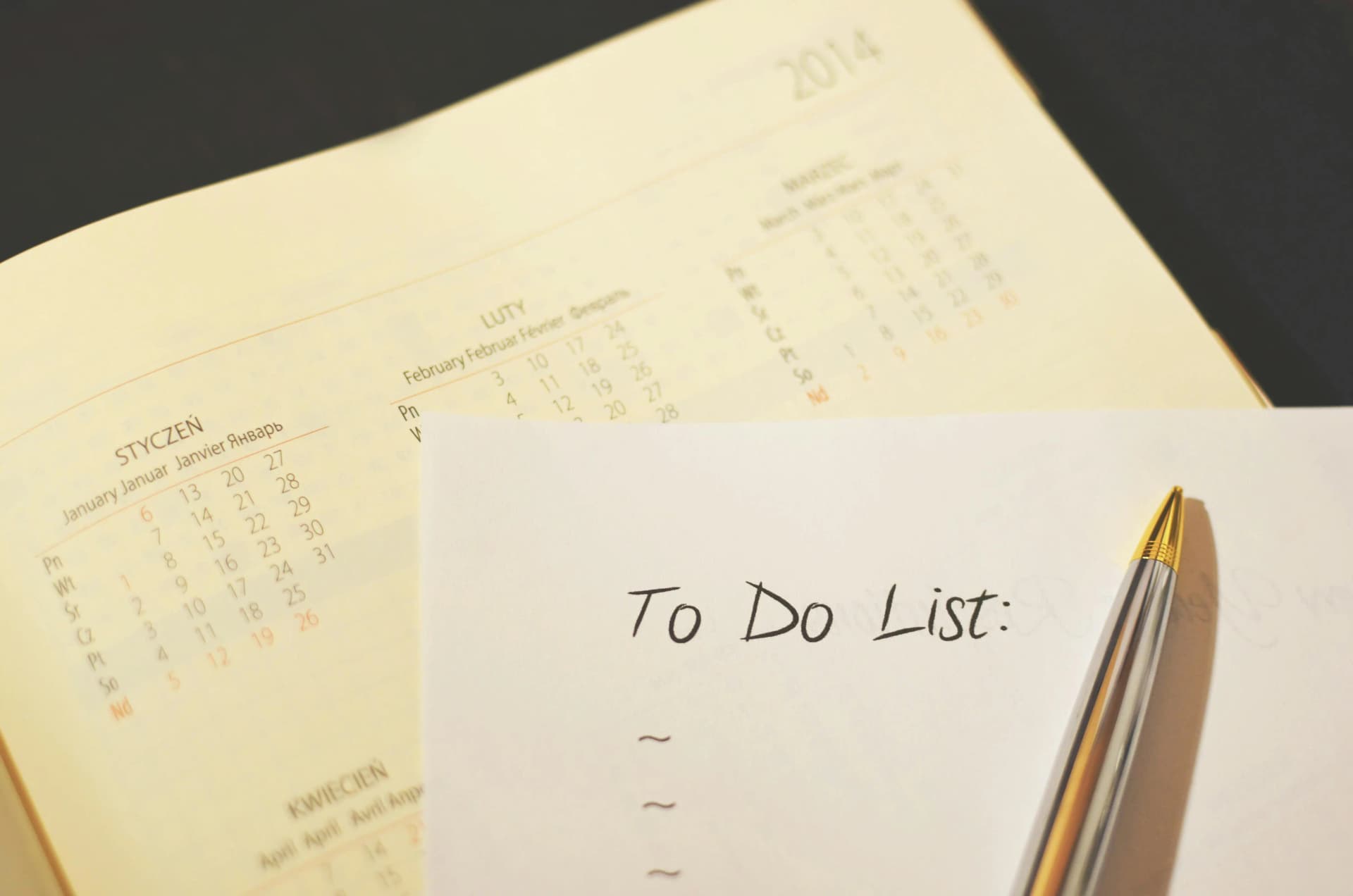
The to-do list is the default productivity tool for most people. It's also, in its standard form, one of the more reliable ways to stay busy without making progress.
The to-do list is so embedded in how people think about productivity that questioning it feels almost perverse. Of course you should write down what needs to be done. Of course having a list is better than not having one. The alternative — keeping everything in your head, hoping nothing falls through — is clearly worse.
All of that is true, and none of it means the standard to-do list is actually working. For most people, the list has quietly become something different from what it was supposed to be: not a tool for getting important things done, but a container for the anxiety of having too much to do. Those are not the same thing, and confusing them is costing more than most people realize.
What the list actually is
A typical to-do list is a flat collection of tasks with no hierarchy, no time allocation, and no distinction between what matters and what merely exists as an obligation. "Finish quarterly report" sits next to "reply to Mark" sits next to "renew gym membership" sits next to "research flights." They're all items. They all carry the implicit weight of undone things. And at the end of most days, the list is longer than it was in the morning — because the rate of task generation in most working lives significantly exceeds the rate of task completion.
This creates a specific psychological dynamic. The list grows faster than it shrinks. The satisfaction of crossing things off is consistently outweighed by the anxiety of watching new items appear. The list stops feeling like a tool and starts feeling like evidence of inadequacy — a running record of everything you haven't done yet.
Research on the "Zeigarnik effect" — the tendency to experience intrusive thoughts about uncompleted tasks — helps explain why this is cognitively expensive. The brain maintains open loops for unfinished items, generating low-level background attention on each of them. A long to-do list is not just a visual record. It's a generator of mental noise.
The equality problem
The deepest structural flaw in the standard to-do list is that it treats all tasks as equal. They're not. They differ enormously in their importance, their urgency, their cognitive demand, and the degree to which completing them actually moves anything meaningful forward.
A list that doesn't distinguish between these dimensions sends you to whatever is easiest, most urgent, or most recently added — which is systematically different from whatever is most important. The satisfying work of clearing small tasks produces the neurological reward of completion without the actual progress of meaningful work. You can spend an entire day on your to-do list and end it with nothing important done, while feeling vaguely productive because things got crossed off.
The to-do list rewards completion. It has no mechanism for rewarding the right completion.
This isn't a discipline problem. It's an architectural one. A tool that treats a five-minute email reply and a two-hour piece of important work as equivalent items will consistently produce behavior oriented toward the five-minute reply.
What works instead
The fix isn't to abandon lists. It's to change their architecture so that the tool is actually oriented toward what matters rather than what accumulates.
Separate capture from prioritization. A to-do list that serves as both an inbox and a task manager fails at both. Everything that needs to be done goes into the capture list — emails to reply to, errands, small requests — but nothing stays there without being actively assigned to a specific time, delegated, or deliberately dropped. The list is processed, not merely added to.
Work from a daily short list, not the master list. Each day, before starting work, identify the two or three things that would make the day genuinely productive if they were completed. Not everything that could be done — the things that actually matter. Work from that short list. Everything else is secondary and gets done only after the important things are addressed, not instead of them.
Assign time, not just tasks. A task without a time allocation is a wish. The question isn't just what needs to be done but when, specifically, it will be done — which requires an honest assessment of how long it will take and where in the day it fits. A to-do list with time allocations is a schedule. A to-do list without them is a source of ambient guilt.
Close loops deliberately. For every item on a list, there are only four honest options: do it, schedule it for a specific time, delegate it, or drop it. An item that sits on a list for more than a week without one of these decisions being made is not a task — it's a decision being avoided, and it's generating mental noise every day it remains unresolved.
The list as symptom
A to-do list that has grown to an unmanageable size is not primarily a productivity problem. It's a symptom of something upstream: too many commitments, unclear priorities, an inability to say no, or an environment that generates more demands than any list can contain.
The list can be restructured, but if the underlying conditions don't change, the restructured list will return to its bloated state within weeks. The to-do list is downstream of decisions about what you're actually committed to and what you're willing to not do. Until those decisions are made explicitly, the list will keep growing — and keep generating the anxious, busy-but-unproductive feeling that most people mistake for the inevitable experience of having a lot to do.
It isn't inevitable. It's the result of a tool being used in a way it was never designed to handle, for a problem it was never designed to solve.
The list is not the problem. The relationship with the list is.