
Why walking is the most underrated tool for mental clarity
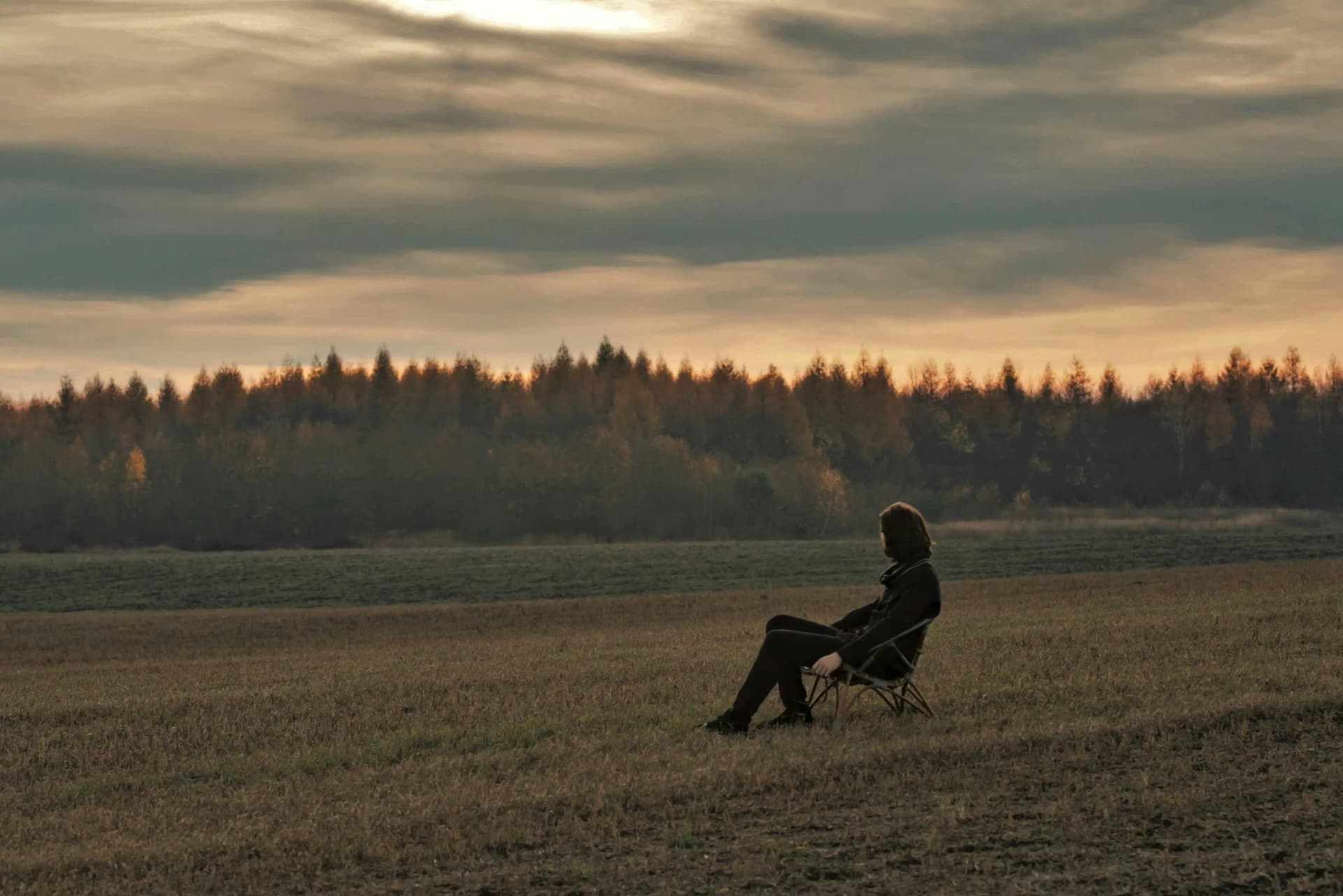
Not as exercise. Not as transport. As a thinking tool — and one of the most effective ones available.
There's a reason Beethoven walked daily. Darwin built a thinking path on his estate and used it so consistently it was called the "Sandwalk." Nietzsche credited his best ideas to long walks. Rousseau wrote that he could only think properly when walking. The list of thinkers who treated walking as an indispensable cognitive tool is long enough to constitute a pattern worth taking seriously.
This isn't romanticization. The relationship between walking and mental clarity is well-documented, mechanistically understood, and consistently underused — partly because it looks too simple to be serious, and partly because modern work culture has no formal place for it.
What walking actually does to the brain
When you walk, particularly at an easy, self-selected pace, several things happen simultaneously that don't happen while sitting.
Blood flow to the prefrontal cortex — the brain region responsible for complex thinking, problem-solving, and creative connection — increases significantly. A Stanford study found that creative output increased by an average of 81% during walking compared to sitting, and the effect persisted for a short period after the walk ended. The mechanism is partly circulatory, partly related to the mild rhythmic stimulation that walking produces.
Walking also activates bilateral cross-body movement — the alternating use of left and right sides of the body — which promotes cross-hemispheric brain activity. This is associated with the kind of associative, non-linear thinking that sitting at a desk, in focused analytical mode, tends to suppress. Walking doesn't make you think harder. It makes you think differently — and differently is often exactly what a stuck problem needs.
Finally, walking without a screen or destination removes the continuous partial attention that most waking hours are spent in. The mind, given genuine idle time, doesn't go blank — it reorganizes. It connects things that were compartmentalized. It surfaces thoughts that were submerged under the noise of input.
Why it works for mental clarity specifically
Mental clarity is not the same as intelligence or focus. It's the felt sense of knowing what you think, what matters, and what to do — the absence of the foggy, cluttered quality that builds up when input exceeds processing time.

Most modern cognitive work generates a significant backlog. Information arrives faster than it can be integrated. Decisions accumulate before the previous ones have been properly digested. The result is a mental environment that feels crowded and effortful even when no single thing in it is particularly complex.
Walking creates processing time. Not structured reflection — just unhurried mental movement, during which the brain's default mode network activates and does the integrative work that focused attention prevents. The thoughts that arrive on a walk are often not new — they're thoughts that were already there, waiting for enough quiet to surface.
The walk doesn't give you new ideas so much as it gives you access to the ones you already had.
The specific problems it helps with
Not all cognitive challenges respond equally to walking. It's particularly effective for:
Stuck problems. When you've been staring at something and stopped seeing it clearly, walking interrupts the fixation. The change of environment and physical state is often enough to dislodge the thinking from its rut and produce a new angle.
Emotional processing. Walking is unusually effective at metabolizing difficult emotions — anxiety, frustration, low-grade dread — that tend to intensify when sitting still. The physical movement seems to provide a channel for emotional energy that otherwise has nowhere to go.
Decision-making. Decisions that feel impossibly complex at a desk frequently clarify on a walk. Partly because the reduced input creates space for the actual priorities to become visible. Partly because physical movement seems to reduce the threat response that high-stakes decisions trigger, making clearer thinking more accessible.
Creative connection. The associative, non-linear thinking that walking promotes is exactly the mode that generates creative insight — the unexpected connection between two apparently unrelated things that turns out to solve the problem.
How to actually use it
The most common mistake is treating a walk as something to get through rather than something to use. Listening to a podcast or a call the entire time replaces one form of input with another and largely defeats the purpose. The mental clarity benefits depend on the mind having genuine idle time — not emptiness, just the absence of managed input.
A 20-minute walk without headphones, taken when a problem is genuinely stuck or when cognitive fog has built up, tends to be worth more than the same time spent pushing harder at the desk. This is not a break from the work. For the kind of problems that require genuine thinking rather than execution, it often is the work.
The simplest implementation: when you notice the quality of your thinking has degraded — when you're rereading the same paragraph, circling the same decision, feeling the accumulated weight of unprocessed input — walk before continuing. Not after. Before.
The desk will be there when you get back. The thinking, in most cases, will be better.