The identity trap: why we stay stuck in old versions of ourselves
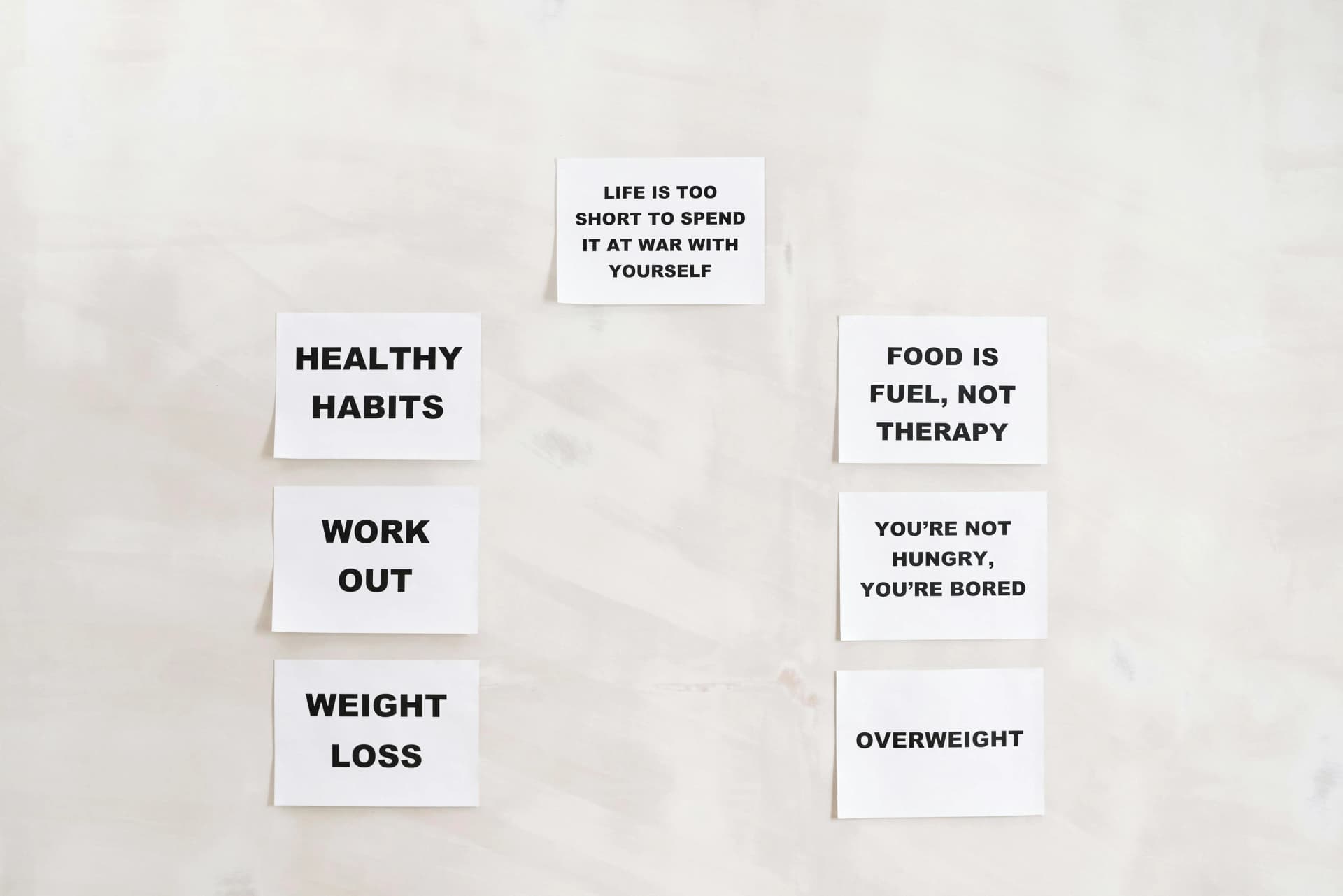
You've changed. So why does it still feel like you're playing a character you wrote ten years ago?
There is a version of you that exists mostly in other people's memories — and quietly, insidiously, in your own. It's the you that was awkward in school, or bad with money, or someone who "just isn't a morning person." That version may be years out of date. And yet, somehow, it keeps running the show.
This is the identity trap: the way our sense of self lags far behind who we've actually become — or who we're genuinely trying to be.
Why the self is stickier than we think
We tend to think of identity as something fluid — something we can reshape with enough effort and intention. But psychologically, identity functions more like a story than a choice. Once a narrative is established ("I'm not a confident person," "I'm the funny one," "I've always struggled with this"), the mind works hard to keep that story consistent.
This is partly cognitive: we remember information that confirms what we already believe about ourselves and quietly discount evidence that challenges it. Psychologists call this self-verification theory — we seek feedback that matches our self-concept, even when that self-concept is negative.
"We don't see ourselves as we are. We see ourselves as we were — the last time we looked closely."
But it's also social. The people around us tend to lock us in. Your childhood friends still tell the same stories about you. Your family still fills the same role for you. Even well-meaning relationships can act as mirrors that only reflect who you used to be.
The moment the trap closes
Identity traps tend to form at high-pressure moments — adolescence, failure, a period of social rejection. These are the moments when we made quick decisions about who we are, and those decisions quietly calcified into facts.
Someone who failed publicly in their teens may carry a low self-concept around competence well into their forties, long after the evidence for it has disappeared. Someone praised only for being "the responsible one" may suppress spontaneity for decades, not because they're actually rigid but because the label stuck.
Worth knowing:
Research by psychologist Carol Dweck suggests that how we explain our traits to ourselves — as fixed ("I'm just not creative") vs. malleable ("I haven't developed this yet") — has a profound effect on whether we attempt to change them at all. The label itself becomes the barrier.
What makes identity change so hard

Even when we consciously want to change, the old identity exerts pull. There are a few reasons for this:
- Identity provides safety. Knowing who you are — even if you don't like it — is predictable. Change introduces uncertainty. The brain treats uncertain as dangerous.
- Behavior and identity form a feedback loop. If you see yourself as someone who doesn't exercise, you avoid exercise, which confirms you're someone who doesn't exercise. Breaking any single link in this chain requires acting against your own self-concept — which feels psychologically wrong, even when it's right.
- Other people have a vote. Relationships are built partly on who each person expects the other to be. When you change, you disrupt that contract. Some people in your life will resist your new version — not out of malice, but because your change requires them to update their own model of you.
- New evidence is filtered, not absorbed. You can have a hundred experiences that contradict your self-concept and still not update it. The mind has a way of treating these as exceptions: “I did well that time, but I'm not really good at this.”
The way out: identity through action, not declaration
Here's what doesn't work: deciding to see yourself differently. Affirmations, visualizations, journaling about who you "truly are" — these can be useful, but they rarely produce durable identity change on their own, because they're detached from behavior.
What actually works is closer to what author James Clear describes as "identity-based habits" — but the mechanism matters. You don't change your identity by thinking about it. You change it by accumulating evidence that you are already becoming a different kind of person.
Every action you take is a vote for the type of person you wish to become. The goal is not to achieve a result — it's to become someone for whom that result is natural.
This means the focus shifts from outcome ("I want to be fit") to identity evidence ("I am someone who moves their body"). The small act of going for a 15-minute walk doesn't transform your body — but it casts a vote. Enough votes change the narrative.
Four practical steps to start updating your self-concept
- Audit the labels. Write down the fixed beliefs you hold about yourself — especially negative ones. Ask for each: when did I form this belief? Is it still true? What would I need to see to update it?
- Act as if — briefly, consistently. Choose one identity you want to build and ask: what is the smallest action the person I want to become would take today? Do it. Repeat. The narrative updates through repetition, not resolution.
- Curate your environment. The people, spaces, and contexts you inhabit constantly signal who you are. Spending time in new environments — communities, roles, conversations — gives you a chance to introduce a version of yourself that isn't tied to your history.
- Allow the grief. Letting go of an old identity — even one you didn't like — can feel like a loss. Some people resist positive change because the old self, however limited, was known. Acknowledging this makes the transition easier.
The deeper question
There's something uncomfortable at the heart of all this: if you can change your identity — if the "you" of ten years ago is genuinely gone — then who, exactly, is the continuous self? Philosophy has wrestled with this for millennia. Psychology has a more practical answer: the self is less a fixed object than an ongoing process of narration.
Which means the story can be edited. It just requires you to stop waiting for permission — from your past, from the people who knew the old version, or from some internal authority who decides when you've "really" changed.
You already have. The question is whether you're willing to act like it.